
We have friends who are native to India and they brought this over once when they visited. We loved it so much that we had to make it ourselves. I make the recipe from the America’s Test Kitchen Vegetarian Cookbook.
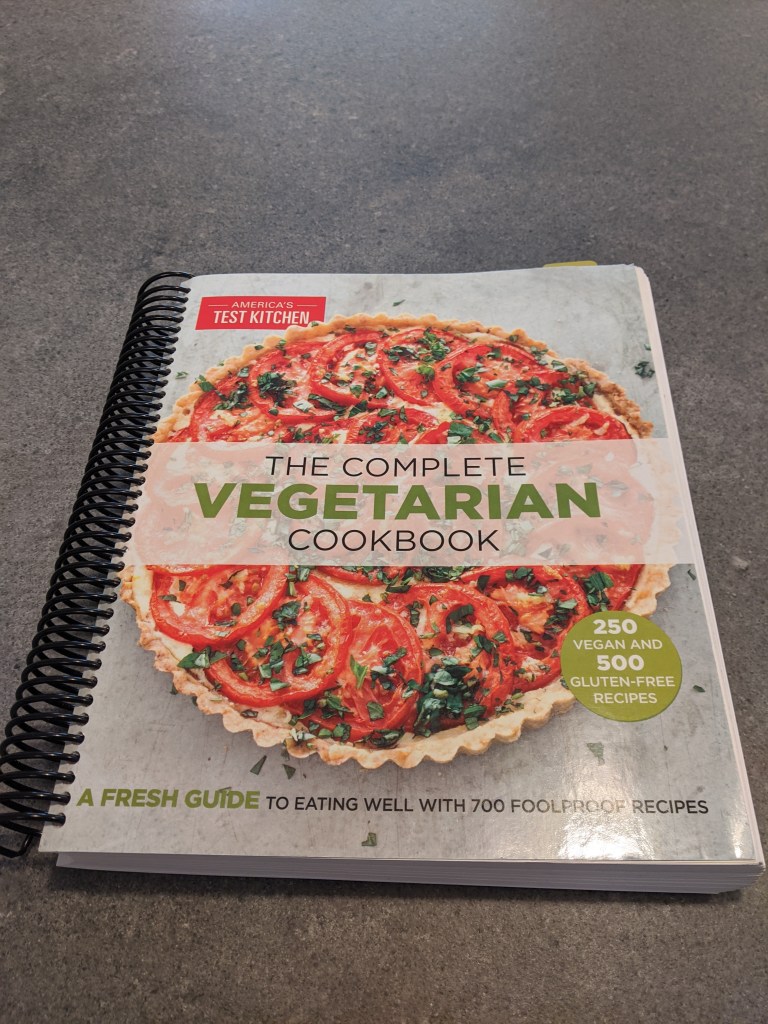
You can subscribe to their site and get this recipe, or you can use this recipe for the Saag Gravy:
https://www.curiouscuisiniere.com/saag-paneer/
And here is a recipe for Paneer:
https://www.feastingathome.com/how-to-make-paneer/
Palak Paneer is a related dish but rather than using a mix of greens, it only calls for fresh spinach. If you like Palak Paneer and don’t want to go to the trouble of making it, Trader Joe’s has Palak Paneer in the frozen section of the store and it is quite good, though not as good as what you could make for yourself.
I have been growing kale in the garden since last fall and have harvested SO much kale. I am going to use kale in my Saag paneer rather than the mustard greens that are called for in the recipe. If you live in an area where mustard greens are difficult to find fresh, try the frozen section.
I am making a quadruple batch of this recipe and plan to freeze most of it to use later since it is pretty involved to make, though not difficult. I am going to make the gravy in one big batch, and make four batches of the paneer (3 gallons of whole milk and a gallon of buttermilk works out perfectly for 4 recipes of the saag gravy and the paneer). I recommend making the paneer. It is not at all difficult to do and so worth it. According to my research, you can find paneer in some stores, but it is not available locally for me so I don’t have a choice.
My recipe recommends that you start by making the paneer. Here are some tips:
- Make sure that your milk is boiling before adding your acid or buttermilk.
- Do NOT whisk the milk vigorously to incorporate the salt and acid/buttermilk.
- Let the mixture sit for a couple of minutes before draining the whey from the curd.
- My recipe recommends using a triple ply of cheese cloth–that is too much even for a very loose weave cheese cloth–single ply for fine weave and two ply for loose weave.
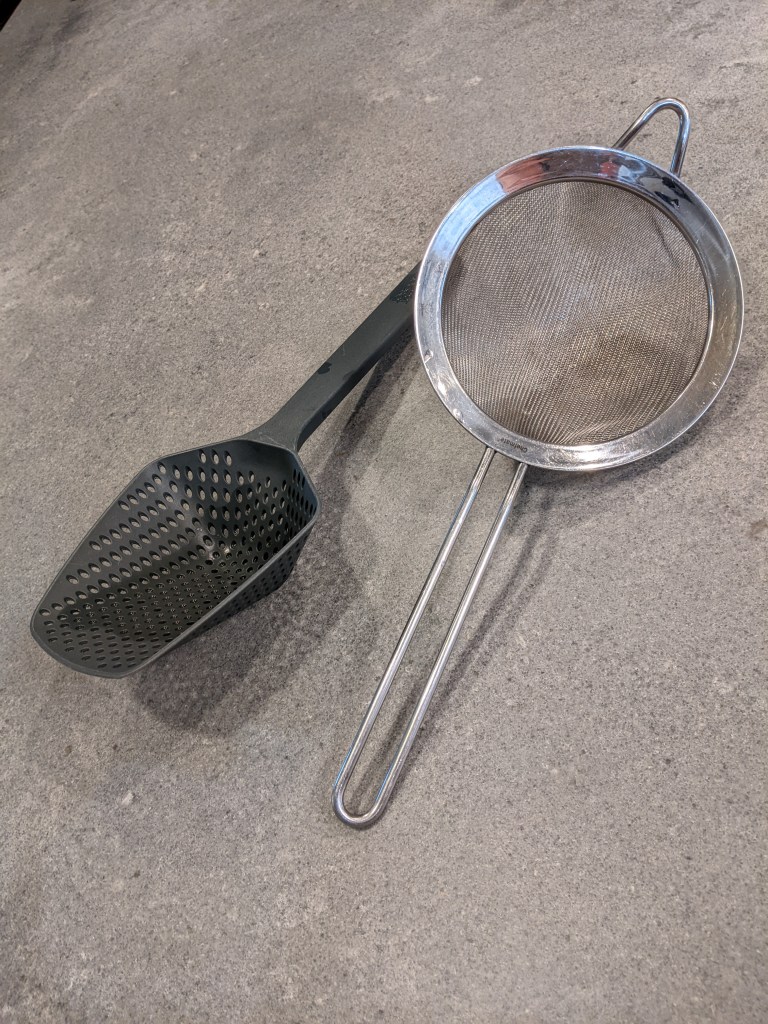
- Do yourself a favor and use the tools below to drain off most of the whey. I used the gray pasta scoop to dip the curd out of the pot and into the mesh strainer. I used the mesh strainer to remove a lot of the liquid. This will save you SO MUCH TIME!
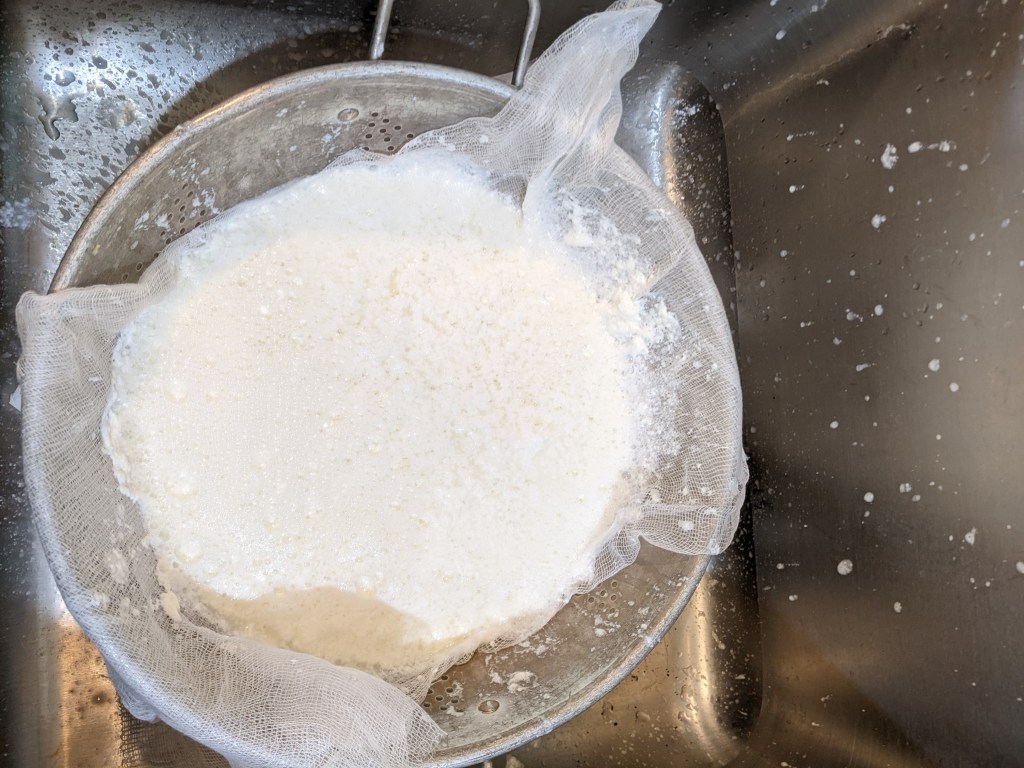
Here are the steps of removing the excess liquid from the paneer–first in the colander; then pressing with your hands; and then between two plates under a weight.
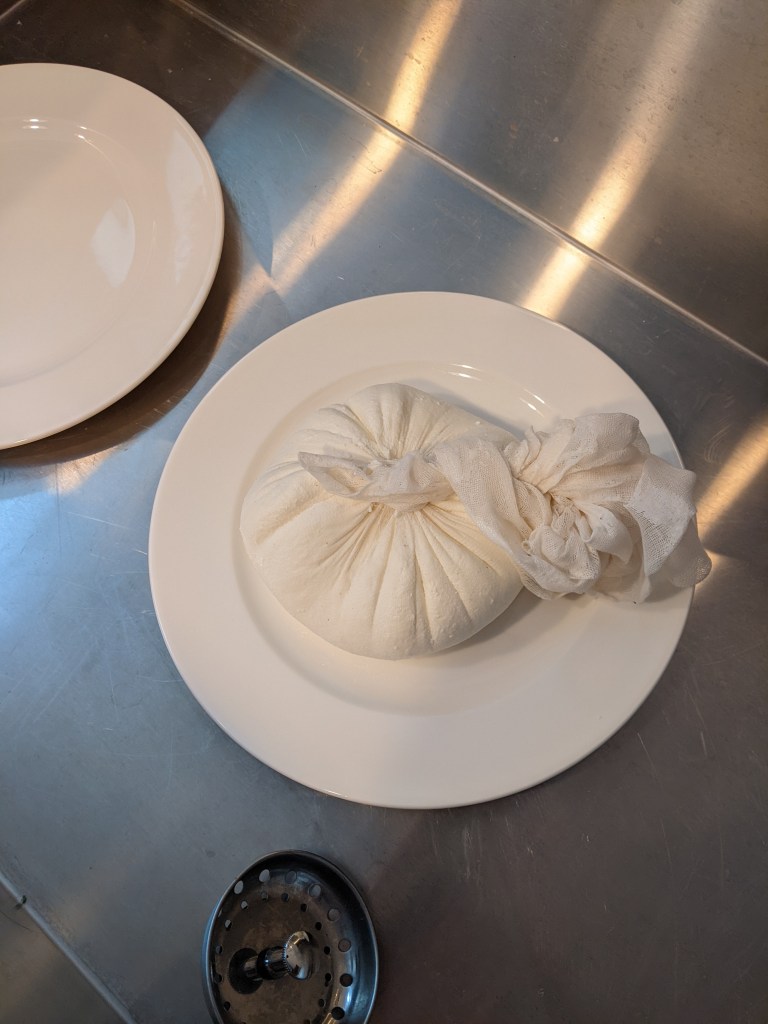
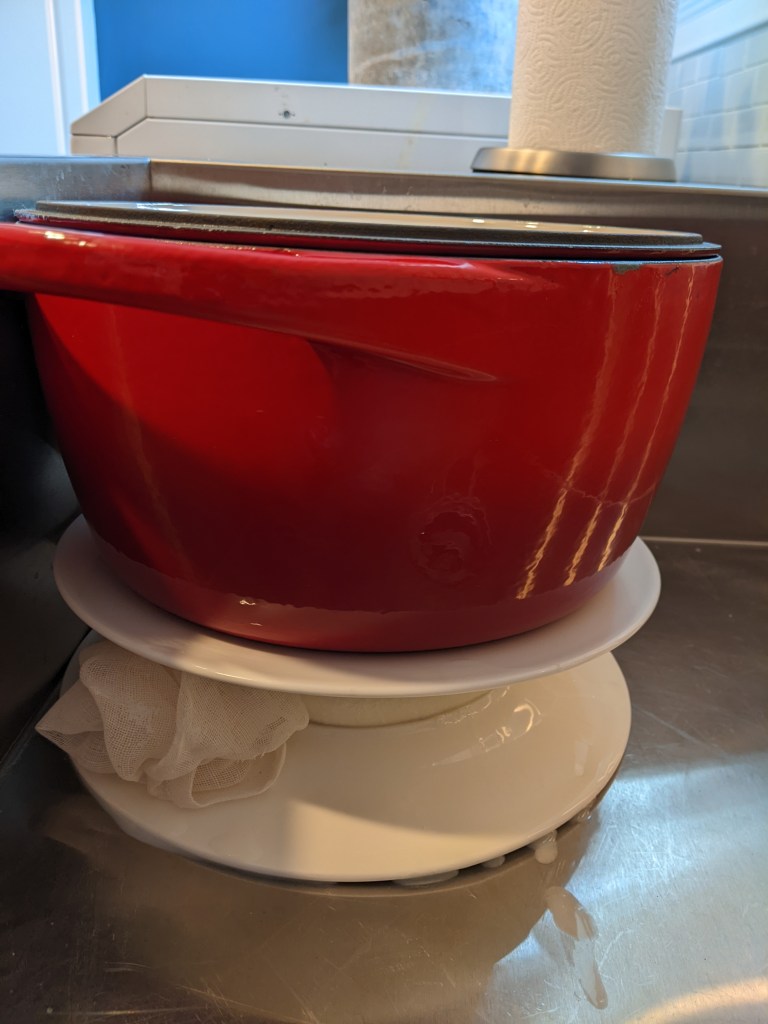
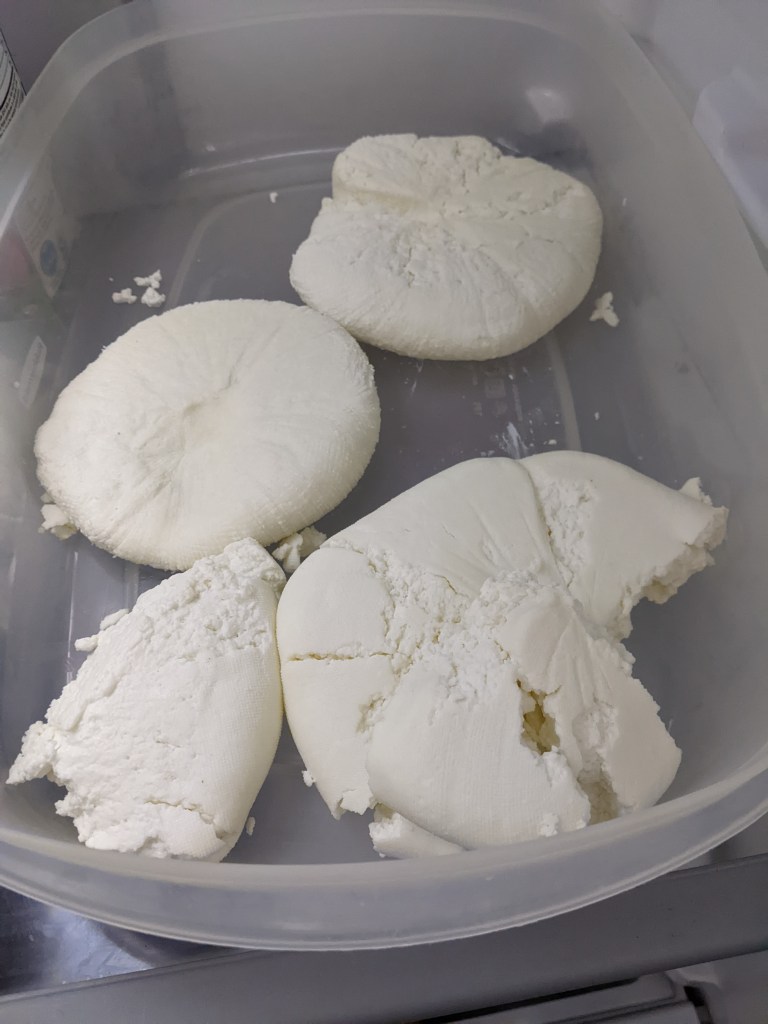
Here is the paneer once it is thoroughly pressed. I put mine in the refrigerator while I was finishing the last couple of batches so it wouldn’t spoil, and to allow it to dry out a little more.
As I mentioned above, I made the Saag gravy in one large batch. This recipe is one that you should definitely get all your ingredients prepped and staged (mise en place) before you start cooking. You will need a good blender and a food processor for this recipe–these will make your life much easier.
Here is the finished Saag gravy:
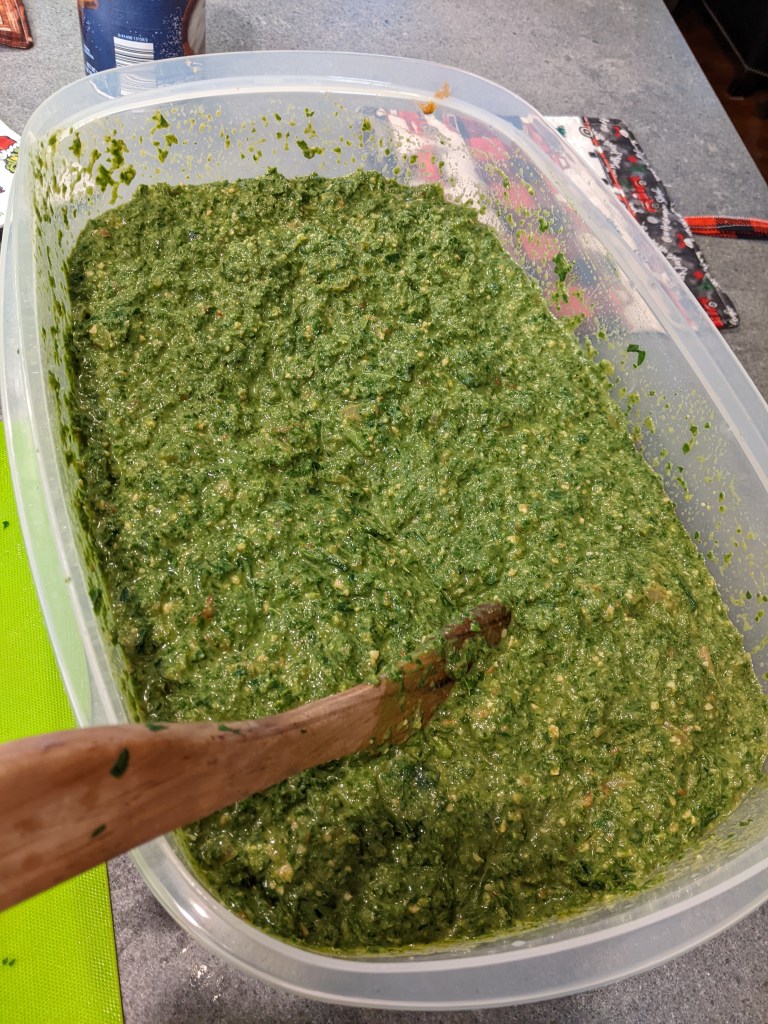
I tasted it and it needed just a smidge more salt.
Since I am freezing 3/4 of the batch that I am making, I divided the Saag gravy into 4-two quart containers.
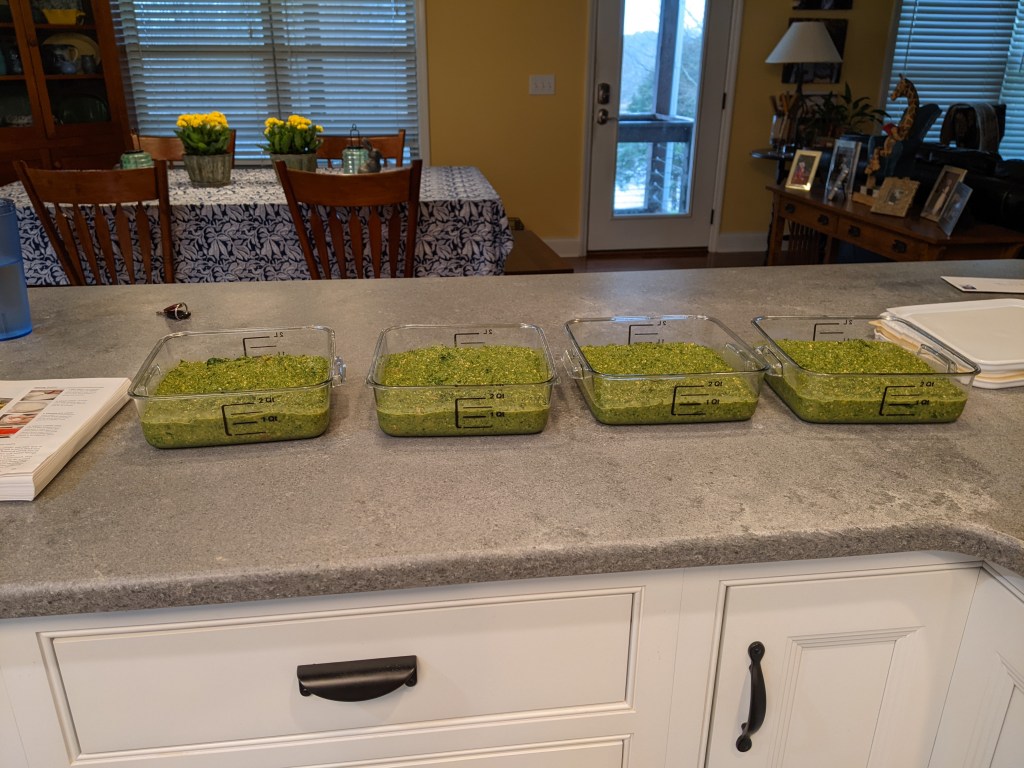
Once all the paneer was made, I cubed it up and divided it among the four containers.
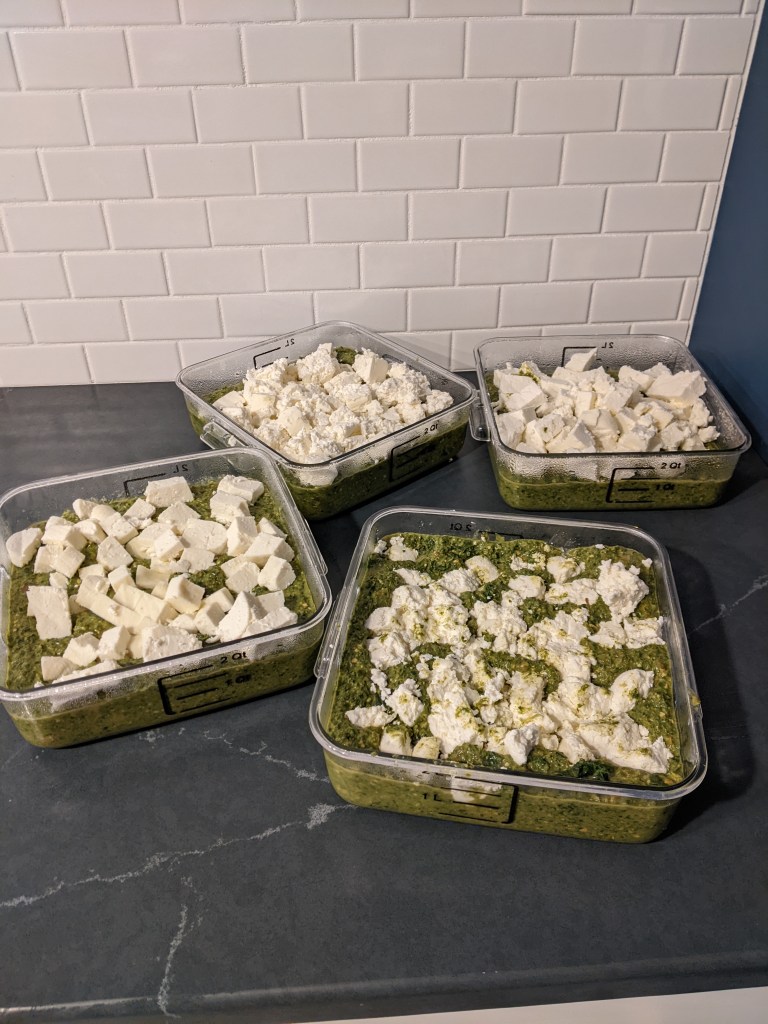
You can see that the texture varies somewhat from batch to batch. Some is very soft and kind of crumbly, and some is perfect.
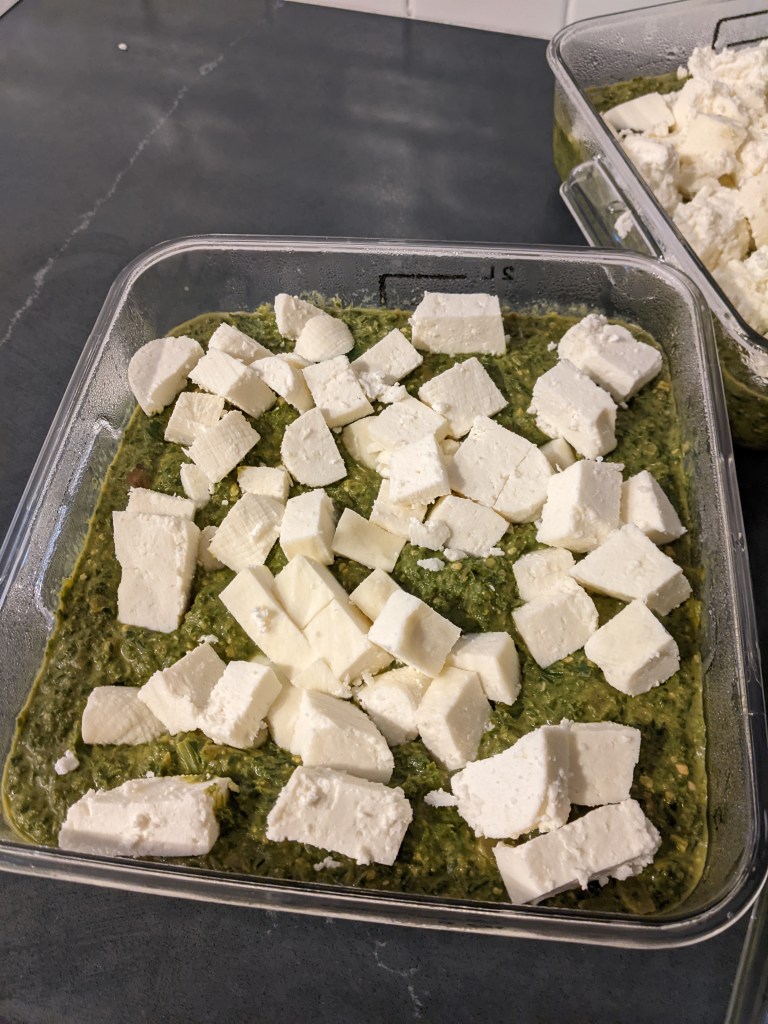
This batch was perfect.
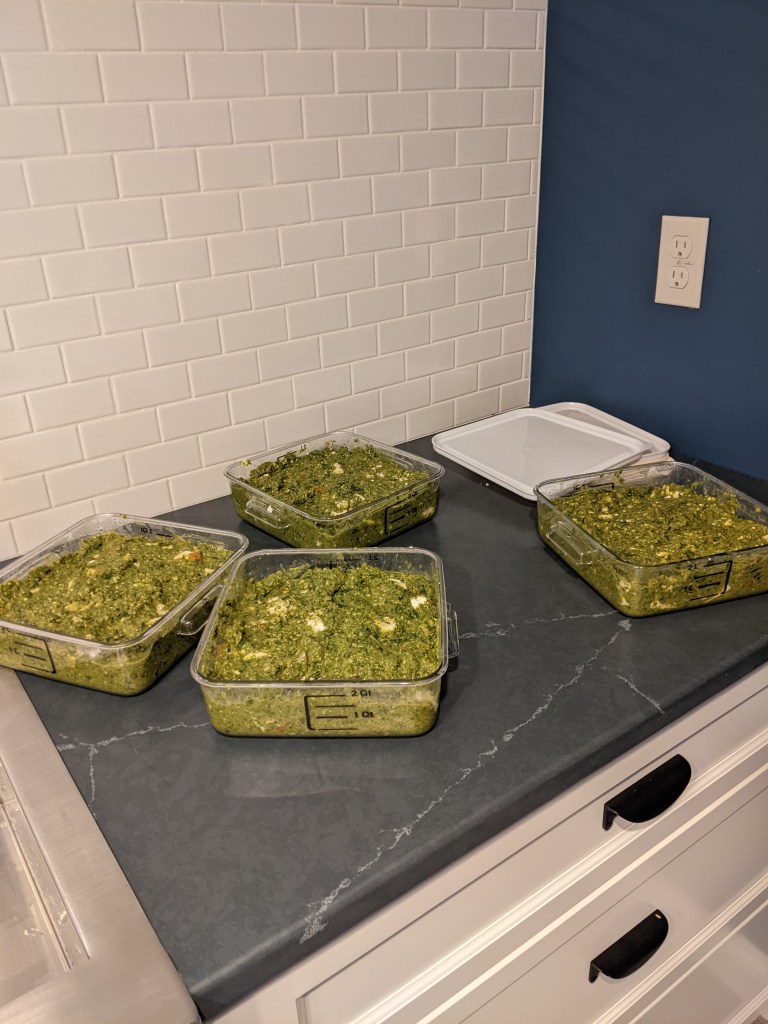
I gently stirred the paneer into the sauce so that it wouldn’t get freezer burned.
I hope that you found this helpful, and that you’ll give Saag Paneer, or Palak Paneer a try.
 Cathy At Home on the River
Thanks for teaching me something completely new! It looks delicious.
LikeLiked by 1 person
OMG–it is DELICIOUS! We love it.
LikeLike
I used to buy this frozen. Loved it.
LikeLike
Really? Where did you find it?
LikeLike